WEASC News
On the Occasion of the UN Desertification and Drought Day 2020: What does the World Evangelical Alliance have to do with the desert?
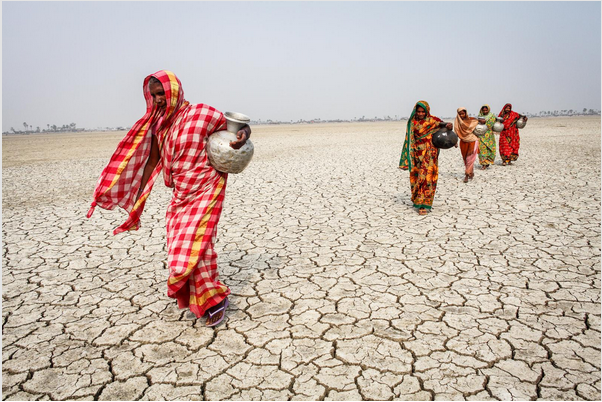
On the occasion of the United Nations Day of Desertification and Drought 2020, the WEA announced its recently approved accreditation with the Secretariat of the United Nations Convention to Combat Desertification (UNCCD). Since 2019, the WEA and UNCCD had established a collaborative relationship, now formalized through this accreditation. With it, the WEA can participate as an observer in the official Conferences of the Parties to the Convention and its subsidiary bodies, bringing the evangelical voice into the global fight against land degradation, desertification, and drought.
Established in 1994, the UNCCD is the sole legally binding international agreement linking environment and development to sustainable land management. The Convention addresses specifically the arid, semi-arid, and dry sub-humid areas — known as the drylands — where some of the most vulnerable ecosystems and peoples can be found.
Marking Desertification and Drought Day 2020 (celebrated June 17), Bishop Efraim Tendero, Secretary General of the WEA, said: "The WEA strongly welcomes and supports the implementation of the Sustainable Development Goals / the Agenda 2030. We are convinced that the Sustainable Development Goals cannot be achieved without the involvement of faith-based communities. Therefore, we seek partnerships with UN organizations, such as UNCCD. We recognize integrated land and water management as an accelerator for achieving most of the Sustainable Development Goals. Through our global network we are in contact with local church communities and other communal bodies who are directly affected by land degradation and the effects of climate change on their livelihoods. As a partner of UNCCD, WEA sees itself as a bridge between those local communities and multilateral environmental governance and land management on the global level. We are thankful to UNCCD for the trusted partnership and are looking forward to the fruitful cooperation as an accredited organization."
The 2020 Desertification and Drought Day focused on the links between consumption and land, under the slogan "Food. Feed. Fibre." To have enough productive land to meet the demands of ten billion people by 2050, lifestyles need to change. If millions of Christians made faith-consistent sustainable lifestyle commitments, the community would have a significant collective impact for the better on creation, the climate, and the wellbeing of neighbors — especially those suffering from poverty, who are hurt most by the effects of climate change, polluted ecosystems, and degraded land.
The WEA launched the "Living the Change" campaign to equip and encourage Christians to make personal sustainable lifestyle commitments motivated by faithful discipleship and the calling to care for creation — including reducing energy consumption, transitioning to renewable energy, using eco-friendly transport, or eating a plant-based diet.
Background
What does the World Evangelical Alliance have to do with the desert? The Bible uses the symbol of the desert to describe struggles, despair, and hopelessness — Jesus was tested in the Judean desert after his baptism, and the Israelites suffered hunger and hopelessness crossing the desert from Egypt to the Promised Land. By contrast, fruitful gardens and fertile land are signs of God's blessing throughout scripture; green pastures are a place of comfort in Psalm 23, and Genesis describes a world rich in nature with many different living beings interacting beautifully within its ecosystem.
That imagery feels especially relevant today, as in almost all parts of the world the fruitful land given by God is under severe pressure from desertification, climate change, drought, and deforestation — much of it human-made. According to the UNCCD Secretariat, more than two billion hectares of previously productive land is degraded today, and over 70 percent of natural ecosystems have been transformed; by 2050, that could reach 90 percent. UNCCD's Global Land Outlook states that over 1.3 billion people are trapped on degrading agricultural land worldwide, and predicts that by 2025, 1.8 billion people will experience absolute water scarcity, with two-thirds of the world living under water-stressed conditions.
As the World Evangelical Alliance, the WEA Creation Care Task Force and WEA Sustainability Center believe it is their call to respect and protect the land God has given, and work together toward sustainable creation stewardship. In May 2020, the WEA achieved accreditation at UNCCD to contribute evangelical voices to the global fight against land degradation, desertification, and drought.
Keep reading