WEASC News
First ever Joint WEA – UN Session to take place in the German UN hub in Bonn
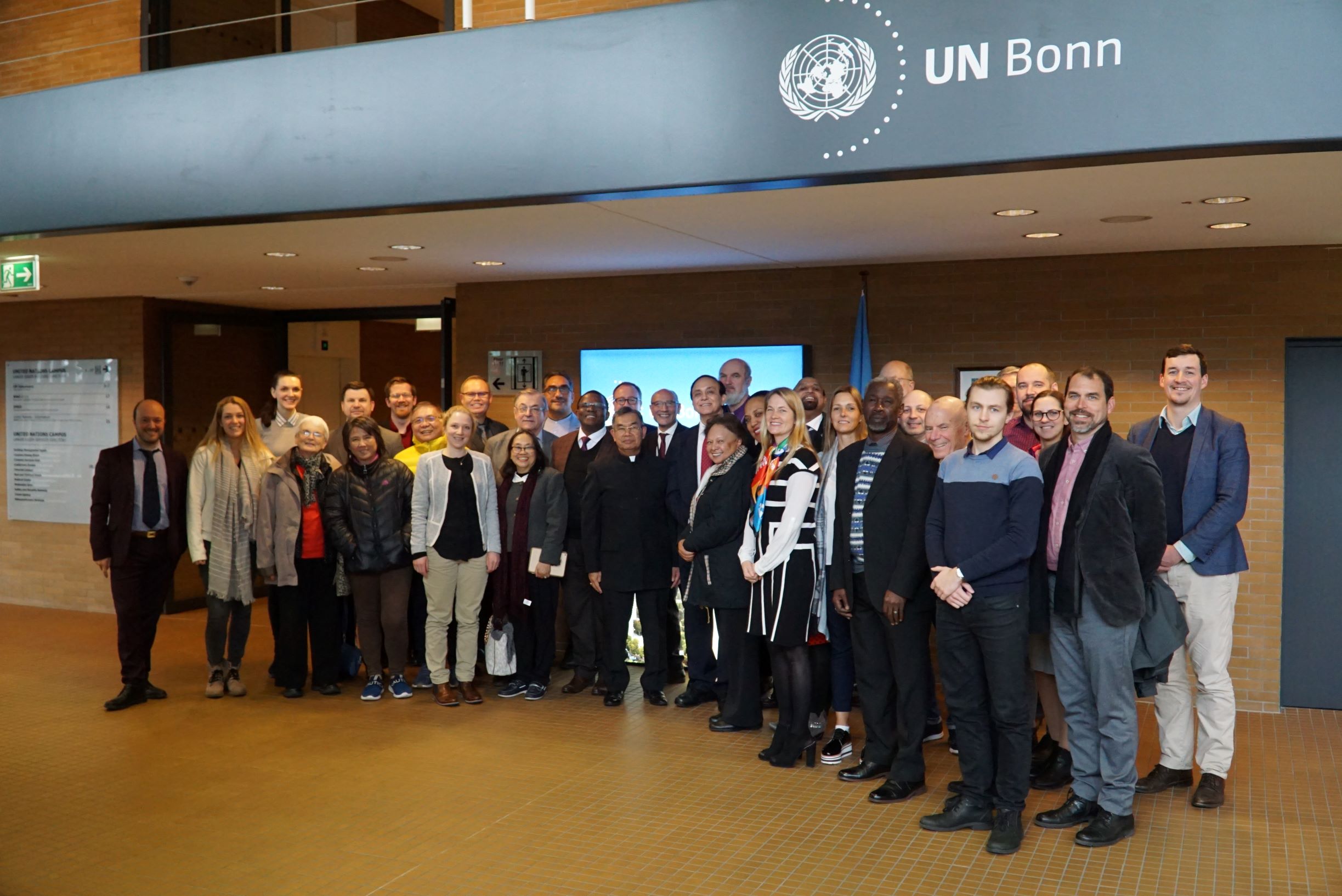
Last week, the first ever joint session between the World Evangelical Alliance (WEA) and United Nations Agencies took place in Bonn, Germany. High-level WEA leaders met with representatives of the United Nations Environment Program (UNEP), the United Nations Convention to Combat Desertification (UNCCD), and the SDG Action Campaign. All three UN entities have offices in the German UN hub in Bonn. The session was part of the program of the WEA Global Leadership Team Meeting, which took place from 25th to 27th of February in Bonn and convened the office of the Secretary General and department heads, leaders of Regional and National Alliances, and WEA networks, also known as commissions, initiatives and task forces.
The host of the session, the Deputy Executive Secretary of UNCCD, started the session off by stating that the majority of sacred texts remind us that land is holy and needs to be protected. He continued, elaborating that a value-based approach to land stewardship represents a unique added value to the work of UNCCD, because religious leaders have the power to call followers to change consumption and production patterns. UNCCD is the sole legally binding international agreement linking environment and development to sustainable land management.
Afterwards, the Principal Coordinator of the Faith for Earth Initiative at the UN Environment Program presented the Program's approach to engaging with faith-based organizations in the fight against environmental degradation. UNEP is one of the first UN Agencies to have adopted a strategy for faith engagement, and WEA is a close partner in UNEP's faith engagement. This engagement is based on the understanding that the concept of 'stewardship of the earth' is common to all religions. The UNEP representative recognized that many faith-based organizations already work towards a healthy environment, and that UNEP considers faith-based organizations very important partners in achieving the "green SDGs" — those related to the environment, water, and climate.
The presentation by the representative of the SDG Action Campaign visualized the activities of the campaign and the stakeholder groups involved. So far, faith-based organizations have played a minor role in the SDG Action Campaign — something one outcome of the joint session aims to change, by planning a deeper collaboration between the SDG Action Campaign and WEA. WEA, as a global network with connections to national and local levels in every part of the world, holds strong mobilizing power. Much of WEA's work already contributes to sustainable development, even where not explicitly phrased in the language of the SDGs — for example the fight against poverty, climate change, and environmental degradation that many evangelical communities around the world take on in their daily charity work.
The members of the WEA Global Leadership Team responded very positively to the presentations by the UN representatives and identified many synergies. Matthias Boehning, WEA UN Liaison Officer in Bonn and Director of the WEA Sustainability Center, stated: "The World Evangelical Alliance aims at a structured dialogue and partnership with UN Agencies in order to jointly address relevant questions regarding sustainable development. Faith communities, particularly a large global network as the WEA, have unique resources, connections and outreach possibilities to contribute to achieving the SDGs." Other WEA representatives thanked the UN colleagues and highlighted the connections between their work and the work of the UN in many fields of sustainable development.
The joint session between WEA and UN showed once more that faith-based organizations and multilateral UN agencies oftentimes work for the same goals, with the motivation to improve the lives of people on a healthy planet. While the worldview that motivates the respective organizations might be different, the visions of a peaceful and healthy world are very similar — a sound basis for fruitful cooperation between intergovernmental agencies and faith-based organizations in many areas of sustainable development. Because after all, natural resources do not have religious borders.
The World Evangelical Alliance has put an increased strategic focus on engaging with United Nations Organizations and Agencies in relation to the Sustainable Development Goals and the Agenda 2030. WEA, as a global umbrella body, is active in almost all areas of sustainable development, ranging from the fight against poverty and better education to advocacy for human rights, particularly religious freedom. With its Creation Care Task Force and the WEA Sustainability Center, WEA is actively engaged in the fight against climate change, one of its current priority areas of engagement.
Keep reading